Skip to content
All work

DeTOKs

A de-influencing campaign about what TikTok makes us buy.
Role
Research, strategy & campaign execution, with Lea El Rachwani
Project type
COM499 Capstone · LAU
Scope
TikTok · Campus booth · Posters · Website
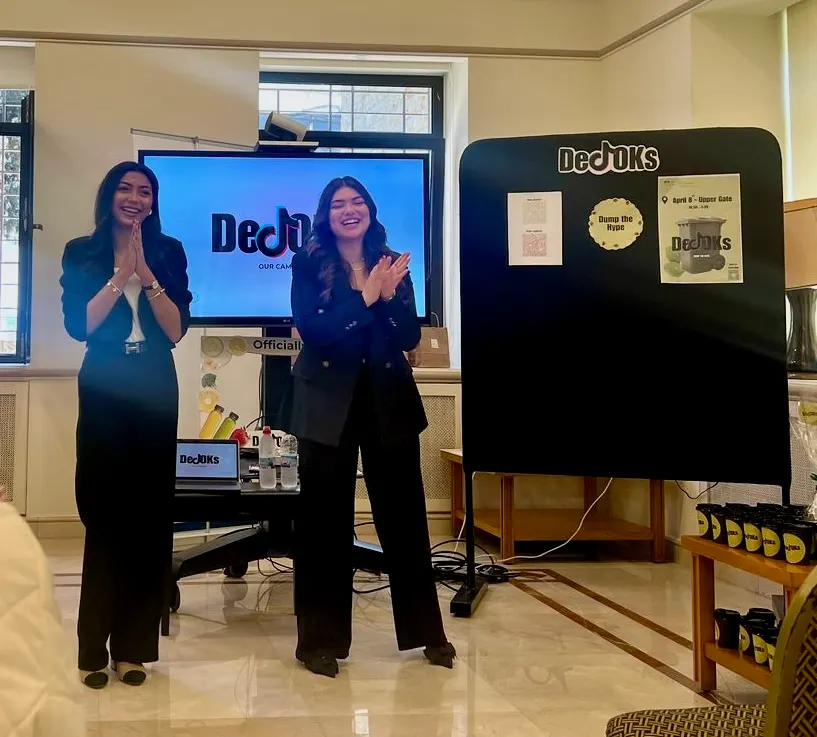
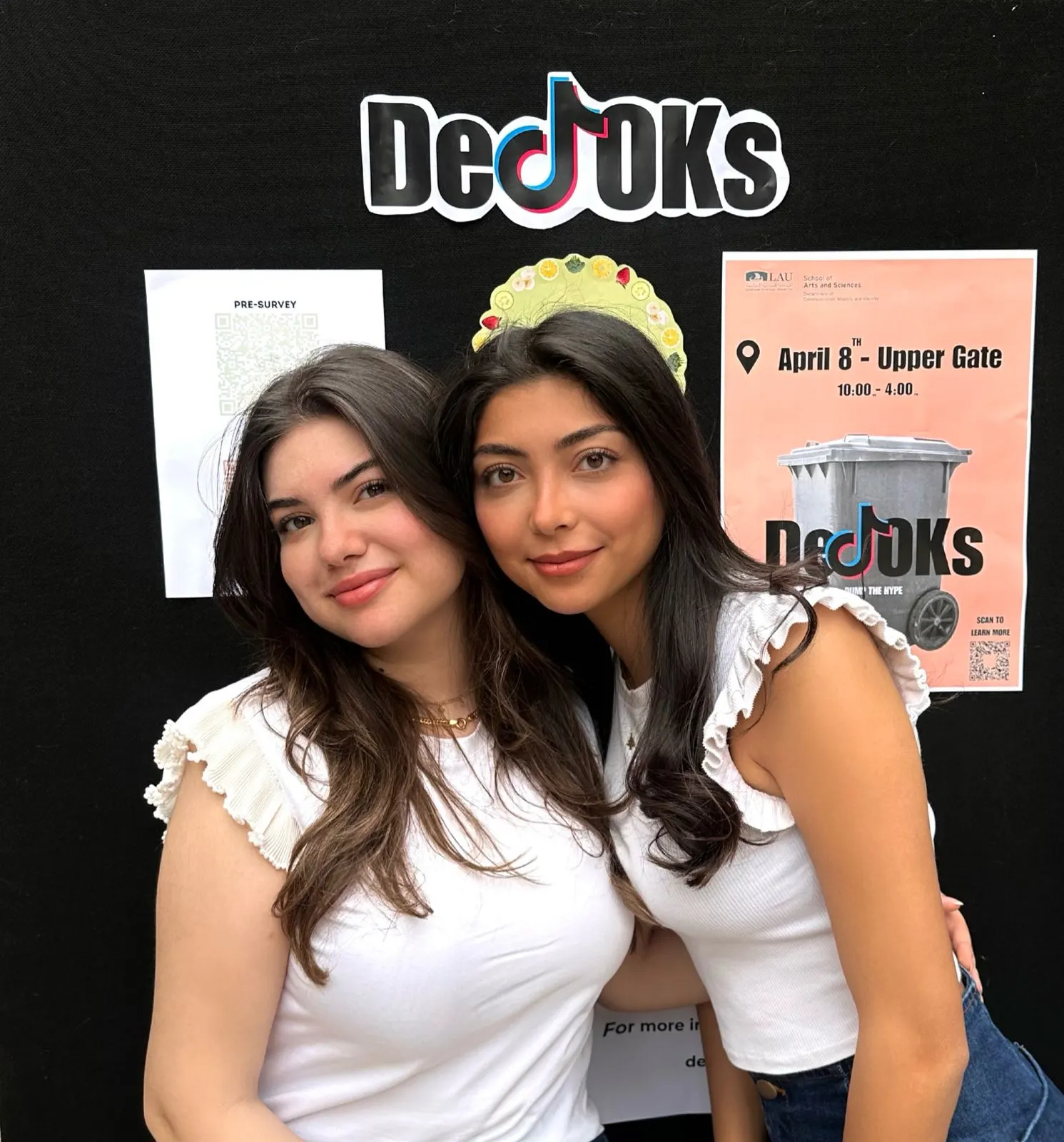
Joudi and Lea smiling in front of the DeTOKs booth wall, with the logo and the “April 8th · Upper Gate” poster.
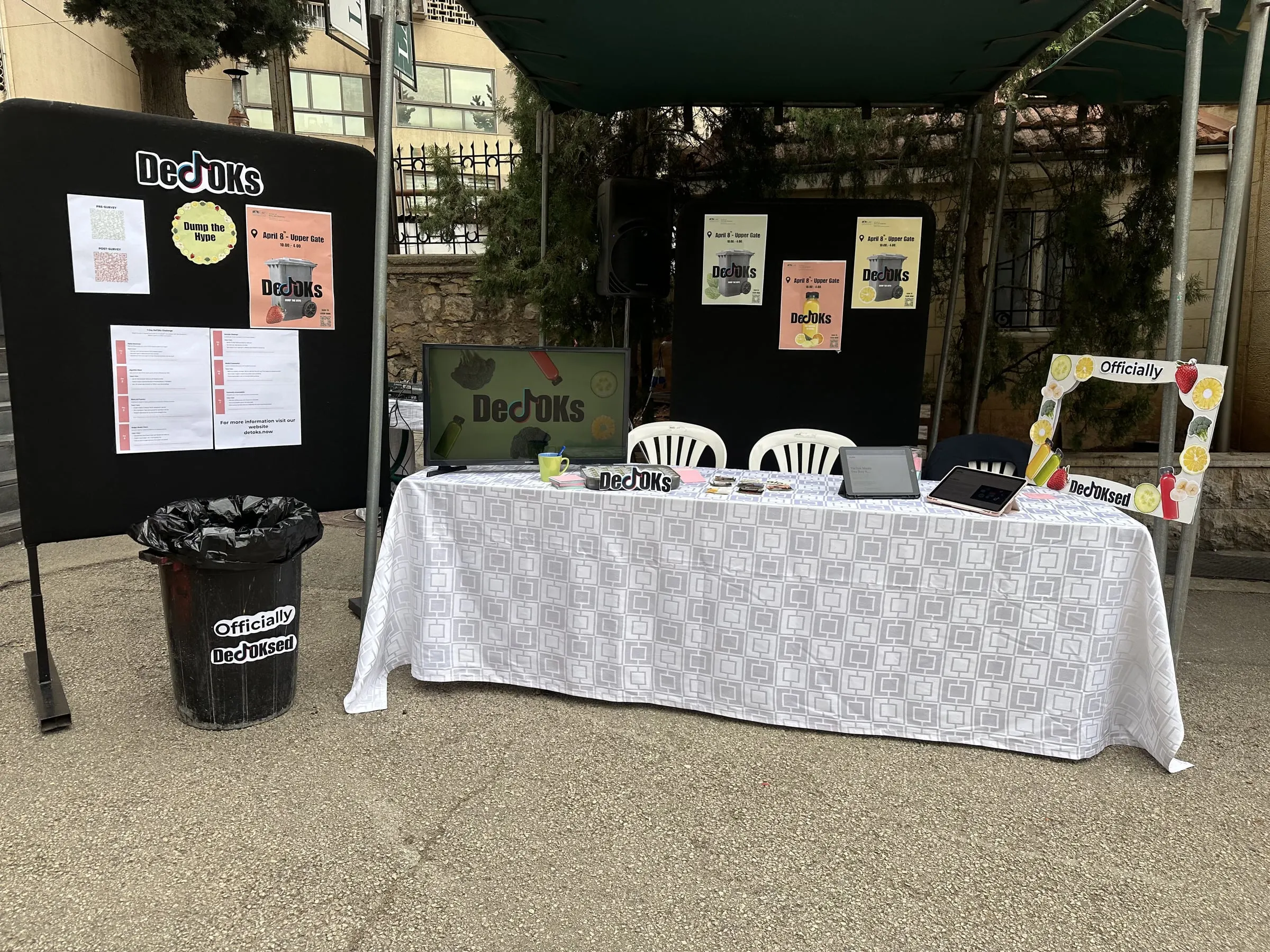
The DeTOKs booth at LAU’s Upper Gate: posters, a table with tablets and the “Officially DeTOKsed” regret bin.

Act I

Understanding the problem

Why Gen Z buys on impulse, and what students told us about it.

01The problem

TikTok made me buy it.

TikTok’s For You Page can turn a product into a must-have in minutes. Between viral trends, influencer “recommendations” and paid promotions that don’t look paid, Gen Z is buying on impulse, and often regretting it. We wanted to know how much, and whether a campaign could help people notice it.

  • Driver 01

    Fear of missing out

    Trends feel urgent: buy it before it sells out, or before it’s “over”.

  • Driver 02

    Influencer credibility

    Relatable creators feel like friends, so it’s hard to tell a real recommendation from an ad.

  • Driver 03

    Algorithmic exposure

    The FYP keeps pushing the same products until they feel like everyone has them.

sometimes the click is where the regret starts.

02Research

We didn’t guess. We asked.

A mixed-methods study grounded in a literature review on TikTok, influencer trust, luxury branding and impulse buying.

  • Quantitative

    Student survey

    TikTok use, brand trust, impulse-buying habits and whether students can spot paid promotions.

  • Qualitative

    Open-ended answers

    Personal stories of TikTok-driven purchases and the regret that followed.

  • Qualitative

    Expert interviews

    With Dr. Dunia Harajli, Assistant Professor at LAU with a PhD in neuromarketing.

  • Content + insight

    Vox pops

    LAU students on camera, sharing what TikTok made them buy and whether it was worth it.

  1. StimulusA TikTok trend
  2. OrganismFOMO, desire, trust
  3. ResponseAn unplanned purchase
The Stimulus-Organism-Response model (Chan et al., 2016) framed how a scroll turns into a purchase.

03Goal

From impulse to intention.

Goal

Reduce impulsive buying among LAU students by raising awareness of TikTok-driven consumerism.

Objective

Promote conscious purchasing habits among at least 50 LAU students.

SWOT, in one line

A real Gen Z problem with credible student voices, competing for attention against the same algorithm it was critiquing.

Act II

Building the campaign

A brand students would recognise, and two strategies to reach them.

04Branding

A detox, with a TikTok twist.

  • Logo

    DeTOKs

    We merged “Detox” with “TikTok” and used the TikTok logo as the T.

  • Slogan

    DeTOKs now!

    Short, loud and easy to repeat on campus.

  • Font

    Impact Bold

    Heavy and direct, like the content it was pushing back against.

Palette

  • Yellow
  • Coral
  • Green
  • White
  • Black
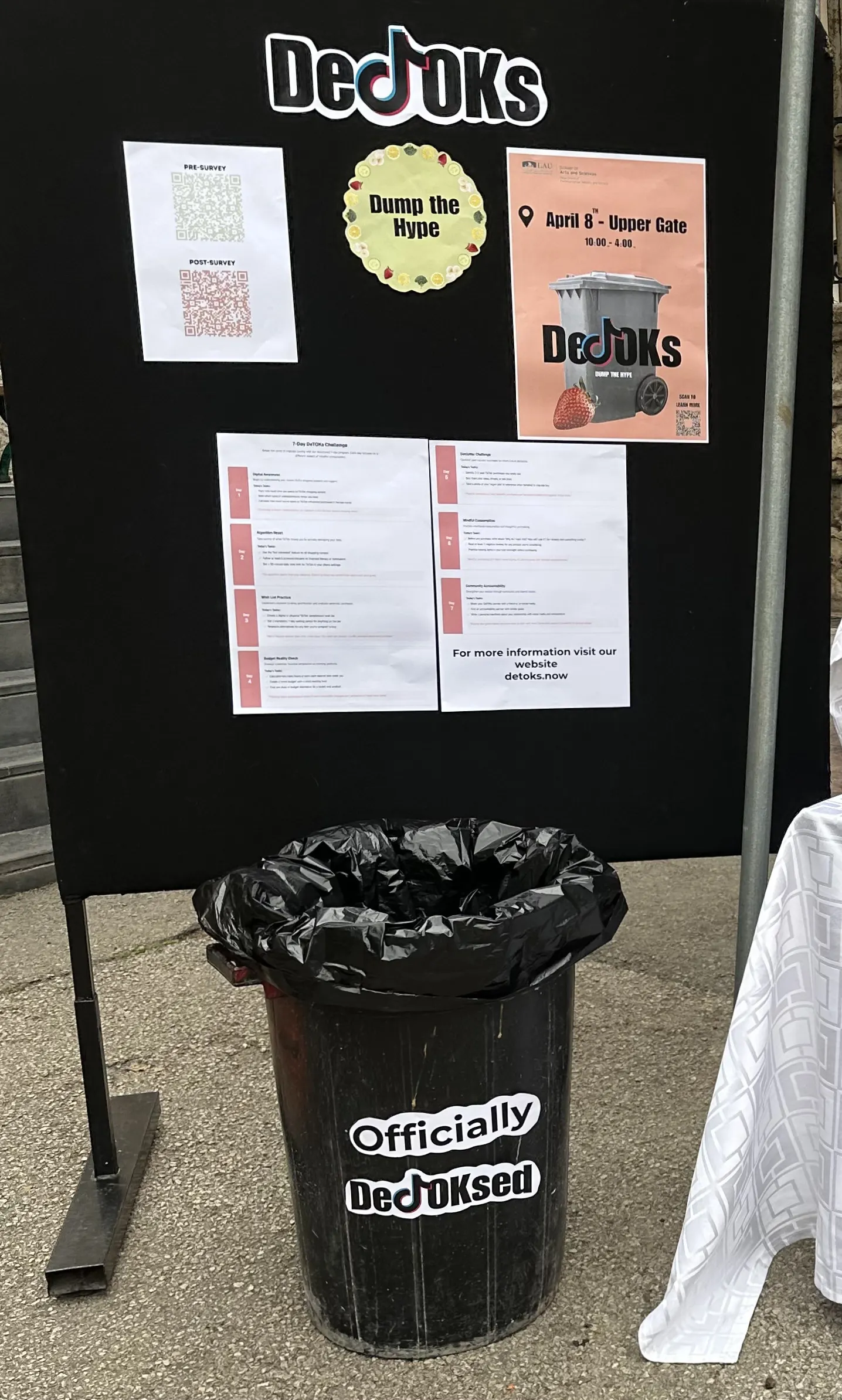
The DeTOKs booth wall with the logo, a “Dump the Hype” sticker and posters, above the black bin labelled “Officially DeTOKsed”.
On siteThe logo, the posters and the bin, all in one frame.The same yellow, coral and green from the posters showed up on the booth, the stickers and the “Officially DeTOKsed” bin, so the campaign felt like one thing from across campus.

05What we did

Two strategies, one message.

Strategy

Persuasion

Credibility first

  • An interview with Dr. Dunia Harajli, neuromarketing PhD
  • Posters spread across campus
  • Wallets handed out with a card to remember us

Strategy

Guerrilla

A booth nobody could walk past

  • Upper Gate, 10am to 4pm
  • The TikTok Regret Trash Bin
  • “Officially DeTOKsed” stickers, drinks and a photo frame

The booth, step by step

  1. Hear what DeTOKs is about
  2. Fill in the pre-survey
  3. Write down a regret purchase and dump it
  4. Get a sticker
  5. Join the activity
  6. Win a DeTOKs drink
  7. Pose in the “Officially DeTOKsed” frame
  8. Fill in the post-survey
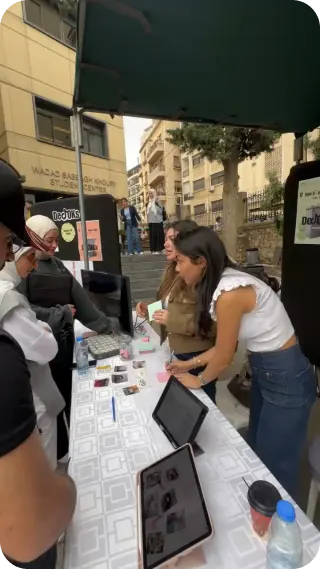
The DeTOKs booth in action: students at the table filling in surveys on tablets.
On the dayUpper Gate, 10am to 4pm.Students stopped, wrote down a purchase they regretted, dumped it in the bin and left “Officially DeTOKsed”, with a sticker, a drink and a photo to prove it.

Act III

Bringing it to campus

Online, on the day, and measured before and after.

06Online

The campaign kept going after the booth.

  • Instagram

    @detoks.now

    23 posts and 139 followers, mixing de-influencing memes, vox pops and booth content.

  • TikTok

    De-influencing videos

    Short videos on the trends that end in buyer’s remorse.

  • Website

    detoks.now

    A quiz, “What type of social media shopper are you?”, with tips to fix your relationship with shopping content.
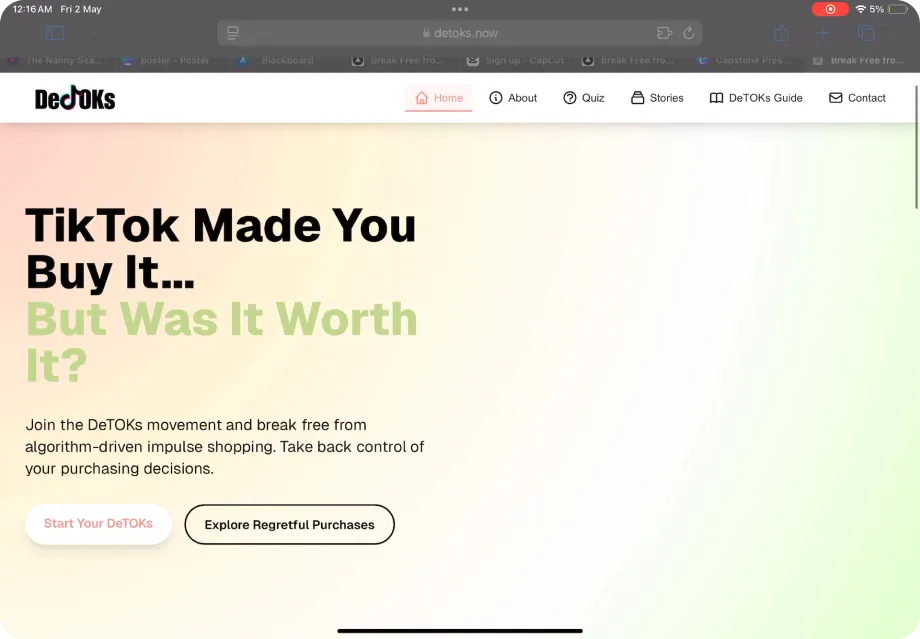
Screen recording of detoks.now on an iPad: “TikTok made you buy it… but was it worth it?”
A walkthrough of detoks.now: “TikTok made you buy it… but was it worth it?”

Final surprise: a giveaway of real leather wallets, each with a card to remember us. A small reminder to think before you spend.

07Timeline

Eight weeks, start to finish.

  1. Week 1Strategy, branding, socials live
  2. Week 2Surveys, content, website launch
  3. Week 3Posters designed and up
  4. Week 4Interview + content
  5. Week 5Booth event, vox pops, surveys
  6. Week 6Survey analysis + evaluation
  7. Week 7Peer review + content
  8. Week 8Giveaway + final presentation

08Measuring it

Before and after, at the same booth.

Joudi and Lea presenting DeTOKs in front of the campaign screen and the booth board.
Presenting DeTOKs and what we learned.

Every visitor filled in a pre-survey before the activity and a post-survey after it, so we could see whether their awareness of TikTok-driven buying actually changed. We split every task equally, from research to the final presentation.